US midterms: What Democrats’ win in Congress means for tariffs
Democrats won both chambers, but Trump’s veto and delegated tariff powers mean no near-term change in tariffs is expected.
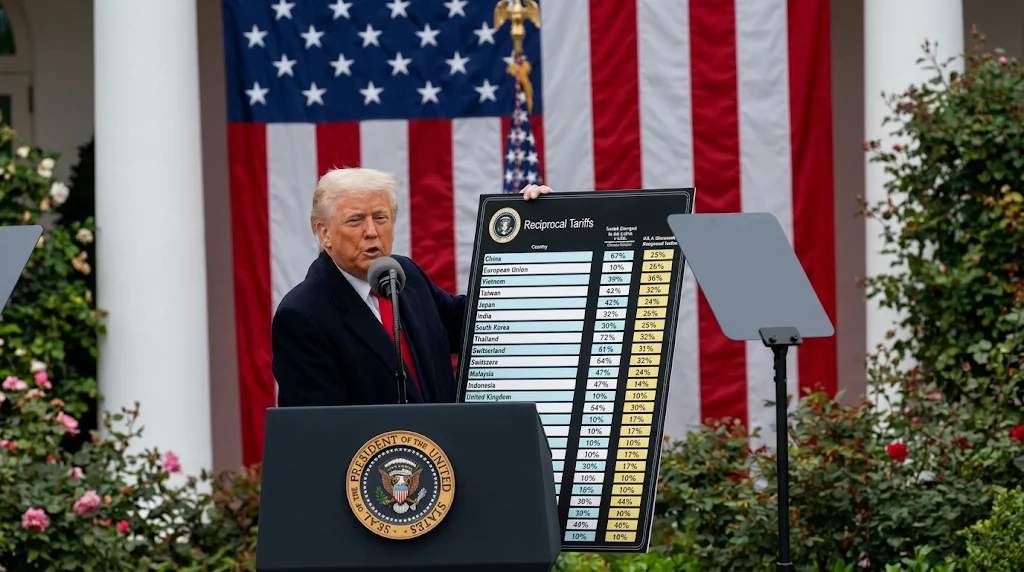
Democrats won control of both the House of Representatives and the Senate in the 3 November 2026 US midterm elections. The 120th Congress, which takes office in January 2027, will step up oversight of trade policy, but the result does not by itself change existing tariffs. President Donald Trump’s veto power and the tariff authorities Congress previously delegated to the president remain in place.
Election results and the new balance in Congress
According to EY’s assessment, Democrats reached 54 seats in the Senate against 44 for Republicans, with two races still uncalled. According to Reuters projections, Democrats won at least 235 House seats. Ron Wyden is expected to chair the Senate Finance Committee and Richard Neal the House Ways and Means Committee, the two committees central to trade and customs legislation.
The legislative process sets limits, however: most Senate bills need 60 votes, and a bill vetoed by the president needs a two-thirds majority in both chambers to become law. Democratic bills to repeal tariffs therefore cannot overcome a veto without support from some Republicans.
The Constitution gives tariff power to Congress
According to the Congressional Research Service (CRS) report “Congressional and Presidential Authority to Impose Import Tariffs” (R48435), updated on 19 March 2026, the US Constitution gives Congress the power to regulate foreign commerce and impose tariffs. Congress has delegated part of that power to the president through various laws under specific conditions. The report summarises five key authorities:
- Section 232 (Trade Expansion Act of 1962): Tariffs on imports that threaten national security. Requires findings by the Secretary of Commerce; no limit on duration or rate. Used on steel, aluminium and automobiles.
- Section 201 (Trade Act of 1974): Safeguards for domestic industries injured by import surges. Requires findings by the International Trade Commission (ITC); up to 4 years, extendable to 8 in total, with a 50% rate cap.
- Section 301 (Trade Act of 1974): Trade agreement violations and certain unfair practices. Requires an investigation by the US Trade Representative (USTR); no rate cap. Applied to certain Chinese imports since 2018.
- Section 122 (Trade Act of 1974): Temporary surcharge for balance-of-payments problems. Up to 15% and 150 days; extension requires an act of Congress.
- Section 338 (Tariff Act of 1930): Tariffs of up to 50% on countries that discriminate against US commerce. Never used as of the report’s writing.
The Supreme Court ruling and its aftermath
The CRS report notes that in Learning Resources, Inc. v. Trump on 20 February 2026, the Supreme Court held that the president cannot use the International Emergency Economic Powers Act (IEEPA) to impose tariffs. President Trump issued a proclamation the same day imposing a 10% tariff on most imports under Section 122, the first use of the law in more than 50 years. According to Baker McKenzie, the administration has since continued to impose tariffs using Sections 122, 301 and 232 and, for the first time, Section 338. None of these authorities requires annual congressional approval.
What can Congress do?
The CRS report lists proposals in the 119th Congress pointing in different directions. One bill would authorise the president to impose reciprocal tariffs up to the rate other countries apply to US goods. Others would repeal Section 338, make presidential tariffs expire after 60 days unless Congress passes a joint resolution of approval, require congressional approval for tariffs on free trade agreement partners and NATO members, and narrow the scope of Section 232.
According to analysts, the Democratic majority’s first steps will be oversight hearings on the impact of tariffs on consumer prices, the administration of IEEPA tariff refunds and trade deals. According to a Reuters report carried by Moneycontrol, Democrats want to rescind authorities based on older laws, such as the Section 338 tariffs on Canadian imports, but the veto and the Senate’s 60-vote threshold mean no near-term change in tariffs is expected. According to Baker McKenzie, cases at the Court of International Trade will remain the main legal check on tariffs over the next 6–12 months.
For e-commerce businesses selling to the US
For businesses selling into the US market, the picture points to tariffs remaining high and uncertain in the near term. Cost calculations should be based not on election commentary but on the product’s tariff classification, origin, import date and the official measures in force. Actions under Sections 301 and 232 are seen as the most legally durable tariff authorities. For Amazon’s latest financial results, see our report on Amazon’s Q3 2026 results.
AI-assisted translation from the Turkish Ecomtrex source.
Frequently asked questions
Will Democrats’ win lower US tariffs right away?
No. The election does not by itself change existing tariffs. A bill repealing tariffs needs 60 Senate votes and a two-thirds majority in both chambers to override a presidential veto.
When does the new Congress take office?
The 120th Congress takes office in January 2027.
Which legal authorities is Trump using for tariffs?
After the Supreme Court ruled on 20 February 2026 that IEEPA cannot be used for tariffs, the administration has used Sections 122, 301, 232 and, for the first time, Section 338. None requires annual congressional approval.
What should e-commerce businesses selling to the US do?
Base costs on the product’s tariff classification, origin, import date and the official measures in force rather than election commentary; analysts expect tariffs to stay high and uncertain in the near term.
Sources
- Congressional and Presidential Authority to Impose Import Tariffs (R48435). Congressional Research Service. Accessed: November 8, 2026.
- What the Midterm election results mean for Trade policy. EY. Accessed: November 8, 2026.
- 2026 US Midterm Election Results: How Will Democratic Control of Both Chambers Impact Trade Issues. Baker McKenzie. Accessed: November 8, 2026.
- Democrats gain influence over trade agenda, but tariff repeals to hit Trump veto wall. Moneycontrol / Reuters. Accessed: November 8, 2026.