NPCI announced a scheme that will channel part of future UPI transaction fees to small businesses
NPCI said the UPI Vyapaar Saksham scheme will be funded with 5% of the merchant discount rate. The scheme will run for three years.
NPCI, which runs India's instant payments system UPI, has announced the UPI Vyapaar Saksham scheme to spread UPI acceptance among small businesses. The scheme will be funded with 5% of the merchant discount rate (MDR) once that fee is introduced on UPI transactions, and will run for three years.
Where the fund will come from, and who is covered
According to the circular reviewed by CNBC-TV18, each issuing bank, acquiring bank, payer payment service provider and UPI app will contribute 5% of its MDR share to the fund. According to MediaNama, that share is calculated on MDR collected on selected person-to-merchant UPI transactions. The funds will be collected monthly, based on the MDR earned in the preceding month. Capital-market transactions and some industry programmes defined earlier are excluded.
A small merchant is defined as a business with annual turnover of up to INR 4 million (about TRY 2.14 million) in the previous financial year. The focus is on Tier 3 to Tier 6 centres, the north-eastern states, Jammu and Kashmir and Ladakh. Small merchants in Tier 1 and Tier 2 centres qualify only if they are covered by notified central government schemes such as PM SVANidhi and PM Vishwakarma. According to CNBC-TV18, only transactions of INR 2,000 (about TRY 1,070) or less count towards the incentives, and artificial splitting of transactions to stay under that limit will not be rewarded.
Three components and the expected impact
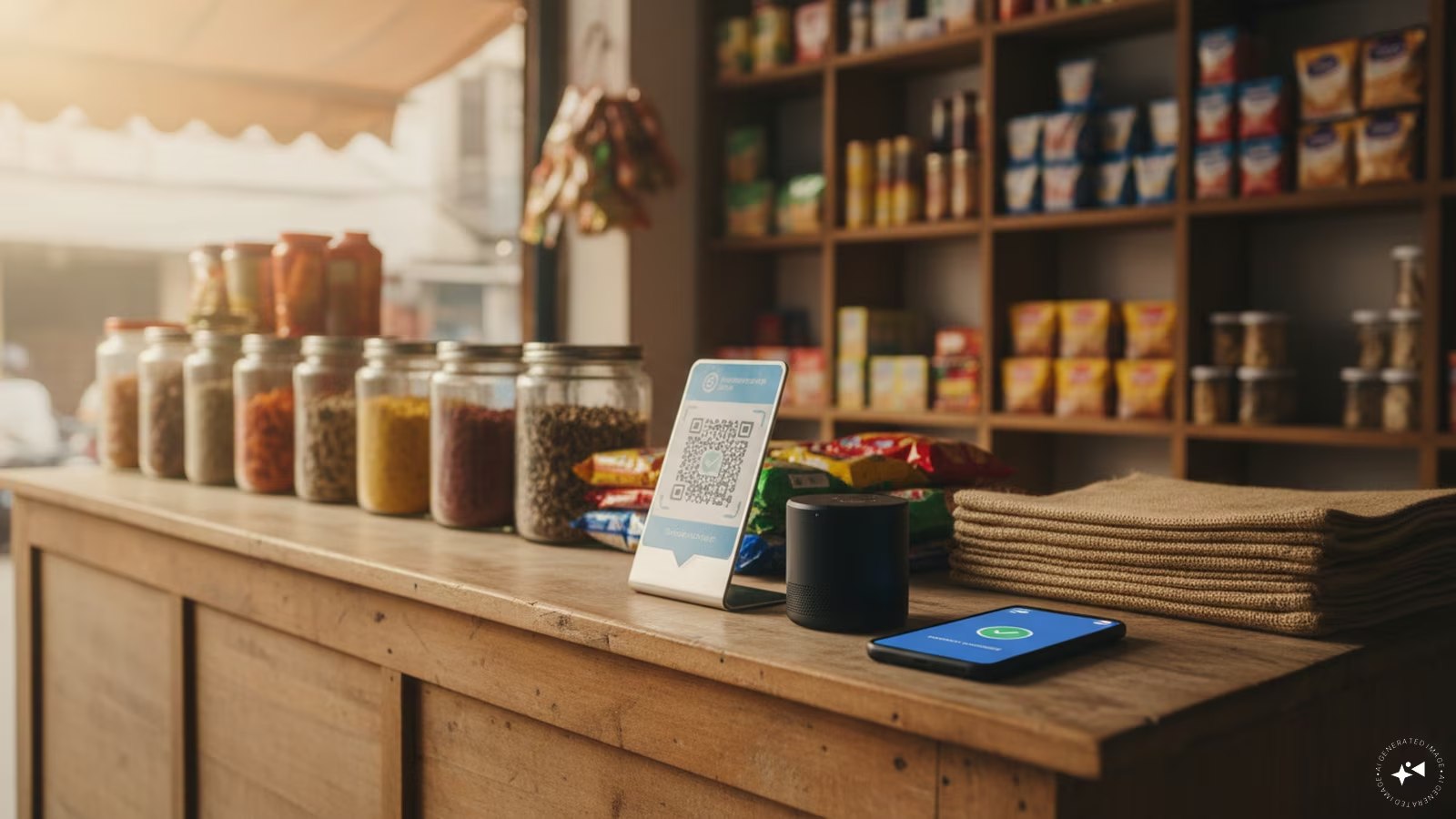
The fund is split into three parts. About 30% goes to onboarding new small merchants: acquiring banks will receive INR 300 (about TRY 160) for every new QR code and INR 750 (about TRY 401) for every soundbox. The merchant must process at least 25 eligible transactions in any two months of a quarter, record a minimum monthly transaction value of INR 5,000 (about TRY 2,675), and must not already have received an incentive for the same infrastructure.
Some 50% of the fund will support transaction growth among existing and newly onboarded small merchants. Acquiring banks will receive an incentive of 0.03% of the aggregate value of eligible transactions, with a 50% top-up for merchants in the targeted geographies. That requires at least 5% quarter-on-quarter growth in eligible volumes. The remaining 20% is for incremental growth in the targeted geographies, paying 0.20% of the increase in transaction value over the previous quarter, on top of the second component. Money cannot be moved between components, payouts are made pro rata if claims exceed the allocation, and unused amounts are carried forward within the same component.
NPCI expects 6 to 10 million new physical QR codes and 500,000 to 1 million new soundboxes a year, along with 30% to 50% annual growth in transaction volumes for existing small merchants. The impact will be reviewed every six months and the scheme may be widened if needed. Incentives will be calculated quarterly and settled within 30 days of a claim. Fraudulent claims will lead to disqualification and clawback, and banks cannot claim again for a device already funded by another institution.
UPI transactions have been exempt from MDR since 2020. The proposed fee framework was due to take effect on 15 October, was deferred until after Diwali, and a new date has not yet been announced. The scheme's three-year clock and its fund both depend on that implementation. A parliamentary finance committee had warned that the absence of MDR made the UPI ecosystem financially unsustainable, and the Department of Financial Services told the committee that incentive support covered only 11% of the industry's cost.
Ecomtrex Take
The scheme shows that preparations are under way for a fee period on UPI transactions, which are free today. The fund will start only when MDR is actually introduced. The aim is to widen acceptance among small businesses, though the debate over whether the fee will be passed on to customers is part of the same step.
You can follow global ecommerce developments in the World category.
AI-assisted translation from the Turkish Ecomtrex source.
Frequently asked questions
How will the UPI Vyapaar Saksham scheme be funded?
The scheme will be funded once a merchant discount rate (MDR) is introduced on UPI. Each issuing bank, acquiring bank, UPI app and payment service provider will contribute 5% of its MDR share to the fund. The scheme will run for three years.
Which businesses are covered?
A small merchant is defined as a business with annual turnover of up to INR 4 million (about TRY 2.14 million) in the previous financial year. The focus is on Tier 3 to Tier 6 centres, the north-eastern states, Jammu and Kashmir and Ladakh. Small merchants in Tier 1 and Tier 2 centres qualify only if they are covered by notified central government schemes such as PM SVANidhi and PM Vishwakarma.
Are UPI transactions charged a fee today?
No. No MDR has been levied on UPI transactions since 2020. The proposed MDR framework was due to take effect on 15 October, was deferred until after Diwali, and a new date has not yet been announced. The scheme's clock also depends on that implementation.
Sources
- NPCI launches MDR-funded scheme to further UPI adoption among small merchants: Why it matters. MediaNama. Accessed: November 16, 2026.
- NPCI notifies UPI Vyapaar Saksham scheme to push small-merchant acceptance, to be funded from UPI MDR. CNBC-TV18. Accessed: November 16, 2026.