Shein and Temu Overtake ZARA
The Chinese platforms take 3.6% of South Africa's apparel market and keep growing despite US tariffs

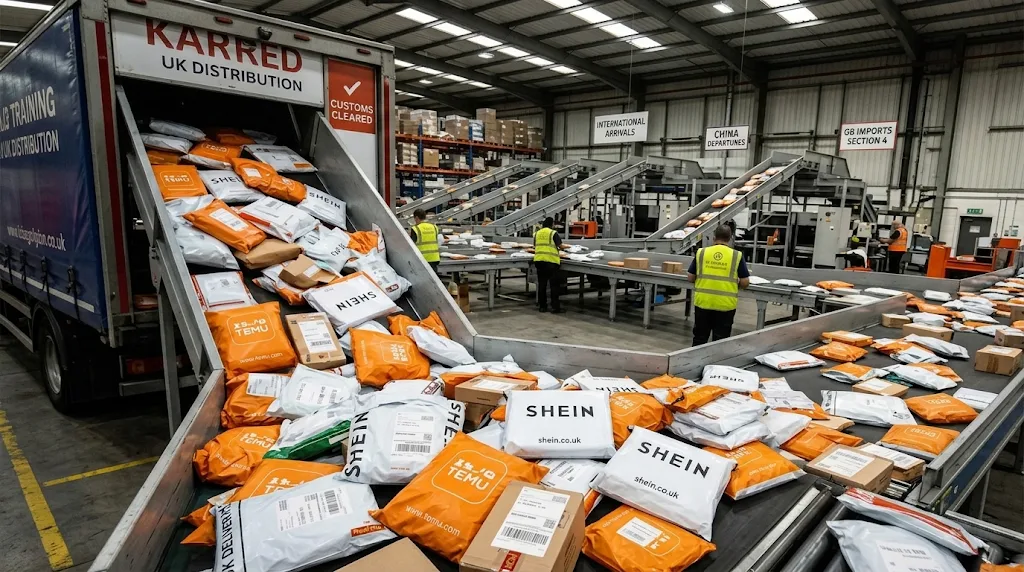
Chinese e-commerce giants Shein and Temu have reached a 3.6% share of South Africa's clothing, textile, footwear and leather (CTFL) retail market, with 2024 sales of 7.3 billion rand (about $405 million).
- Shein entered the market in 2020 and Temu in 2024.
- Aggressive pricing, strategic marketing and initially tax loopholes helped them gain ground quickly against local retailers.
- Local retailers pressed regulators last year to close the tax advantage, and the loophole was closed at year-end.
Compared with local and international rivals
- Local brands' CTFL share fell from 75.3% in 2011 to 74% in 2024.
- International store brands such as H&M, Zara and Cotton On hold a combined 3.4%.
- Shein and Temu's combined 3.6% puts them ahead of these brands.
- Online, Shein and Temu now hold 37.1% of the CTFL e-commerce market.
- Shein alone dominates 28% of women's clothing online sales.
BMA consultant Sean Mercer:
"International brands took 13 years to gain this market share; Shein and Temu reached and passed it in five."
The picture shows Shein and Temu rapidly joining the leaders of South African e-commerce and posing a strong challenge to established retailers with price-led strategies.
Meanwhile, Shein and Temu keep growing despite US tariffs
US President Donald Trump's order removing the customs exemption for goods under $800 from 29 August was seen as a major threat to Shein and Temu, which ship small parcels directly from China. The data, however, show the opposite.
Shein reached $27 billion in gross merchandise value (GMV) in the first half of 2025, up 15–20%.
Temu achieved $35 billion GMV in the same period, up 50%. Its 2025 target: $100 billion.
Short-term contraction, long-term adaptation
After the US imposed an extra 10% tariff on Chinese goods and removed the exemption, both platforms raised prices, which immediately hit sales:
- Shein sales fell 23%,
- Temu sales fell 17% (Bloomberg Second Measure data).
After the backlash, price increases were reversed and new pricing was made more transparent with an "Import Charges" label.
One user posted on social media about paying $135 in duties on an $85 purchase.
New models, new markets
The crisis also accelerated structural changes for both platforms:
- Temu focused on shipping from US warehouses, shifting the customs burden to sellers.
- Both brands began testing semi-managed logistics models.
- The US now makes up only 30% of Shein's GMV and 35% of Temu's.
Growth is now focused on Europe, Southeast Asia, the Middle East and Latin America. Temu restructured its management team to bring local sellers onto the platform.
AI-assisted translation from the Turkish Ecomtrex source.
Frequently asked questions
What share of South Africa's apparel market do Shein and Temu hold?
3.6% of the CTFL retail market, ahead of H&M, Zara and Cotton On combined at 3.4%, and 37.1% of the online CTFL market.
How did Shein and Temu perform in H1 2025?
Shein reached $27 billion GMV (up 15–20%) and Temu $35 billion (up 50%).
How did US tariffs affect them?
Price rises cut Shein sales by 23% and Temu by 17%; both reversed increases and shifted focus to other markets and US warehouses.