EU budget draft proposes a 3% levy on large digital platforms
The levy would apply to digital companies with EU turnover above 50 million euros and global turnover above 750 million euros.
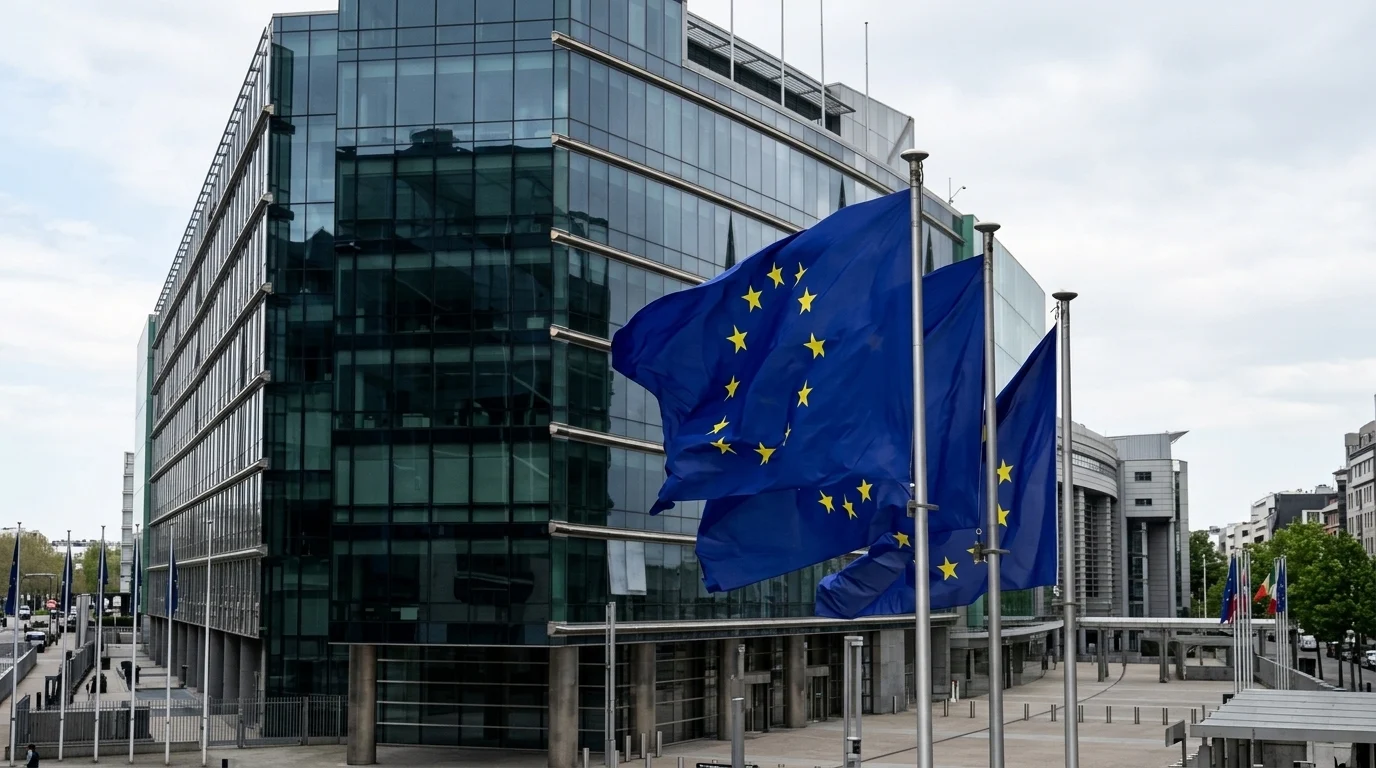
European Council President António Costa put a new compromise draft for the European Union's 2028-2034 long-term budget to member states on 21 November 2026. The draft includes an annual contribution equal to 3% of annual net turnover from online advertising, digital intermediation and marketplace services, and the monetisation of user data. It would apply to companies with EU digital turnover above 50 million euros and global turnover above 750 million euros.
The multiannual financial framework (MFF) is the European Union's core financial rulebook setting seven-year budget ceilings and priorities.
Add Ecomtrex as a preferred source on Google
The draft budget is set at 1,582.5 billion euros
Draft conclusions prepared on 21 November for a special European Council meeting put maximum expenditure for 2028-2034 at 1,582.516 billion euros in commitment appropriations and 1,553.665 billion euros in payment appropriations. Unless otherwise specified, the figures are expressed in constant 2025 prices.
According to Costa's official explanation, that envelope is 10.2% lower than the European Commission's original proposal of July 2025. National contributions would rise, on average, from 0.80% to 0.82% of member states' gross national income.
Who the 3% contribution would cover
The levy is framed as a new own resource on the digital-service revenues of large companies. The draft calls on the Council to resume work on a digital services tax directive, with a view to a swift agreement in 2027.
The new own-resources system is due to enter into force on the first day of the month after the last member state notifies its approval, and to apply retroactively from 1 January 2028. The digital services own resource, however, would apply from 1 January of the year following the year in which the relevant directive becomes applicable.
According to the Commission's estimate, the levy could raise about 5 billion euros a year. The European Parliament had calculated revenue of up to 25 billion euros a year with a higher rate and a wider scope.
A five-item revenue package and the next step
The digital contribution is one of five new revenue streams intended to keep national contributions in check. The package also includes proceeds from the carbon border adjustment mechanism, non-collected electrical and electronic waste, tobacco products and carbon pricing. Costa says that basket, together with existing revenues, could generate about 60 billion euros a year.
Leaders discussed the draft at the special summit on 26-27 November 2026. Costa wants the issue to return at the December European Council, with the aim of a political agreement by the end of the year. Adoption of the multiannual financial framework also requires the consent of the European Parliament.
AI-assisted translation from the Turkish Ecomtrex source.
Frequently asked questions
Which companies would the 3% contribution cover?
Under the draft, it would apply to companies with EU digital turnover above 50 million euros and global turnover above 750 million euros. The base is annual net turnover from online advertising, digital intermediation and marketplace services, and the monetisation of user data.
When would the draft budget be finalised?
Leaders discussed the text at the special summit on 26-27 November 2026. It is due to return at the December meeting, with the aim of a political agreement by year-end. The European Parliament's consent is also required.
Would the digital contribution start in early 2028?
Not automatically. Other new own resources would apply retroactively from 1 January 2028, but the digital contribution would start on 1 January of the year after the relevant directive becomes applicable.
Sources
- A realistic proposal for the EU's next long-term budget. European Council. Accessed: November 28, 2026.
- Special meeting of the European Council (26 and 27 November 2026) – Draft conclusions, ST 15692/26. Council of the European Union. Accessed: November 28, 2026.
- EU-Haushalt: Werbe- und Plattformumsätze sollen künftig mitzahlen. etailment. Accessed: November 28, 2026.